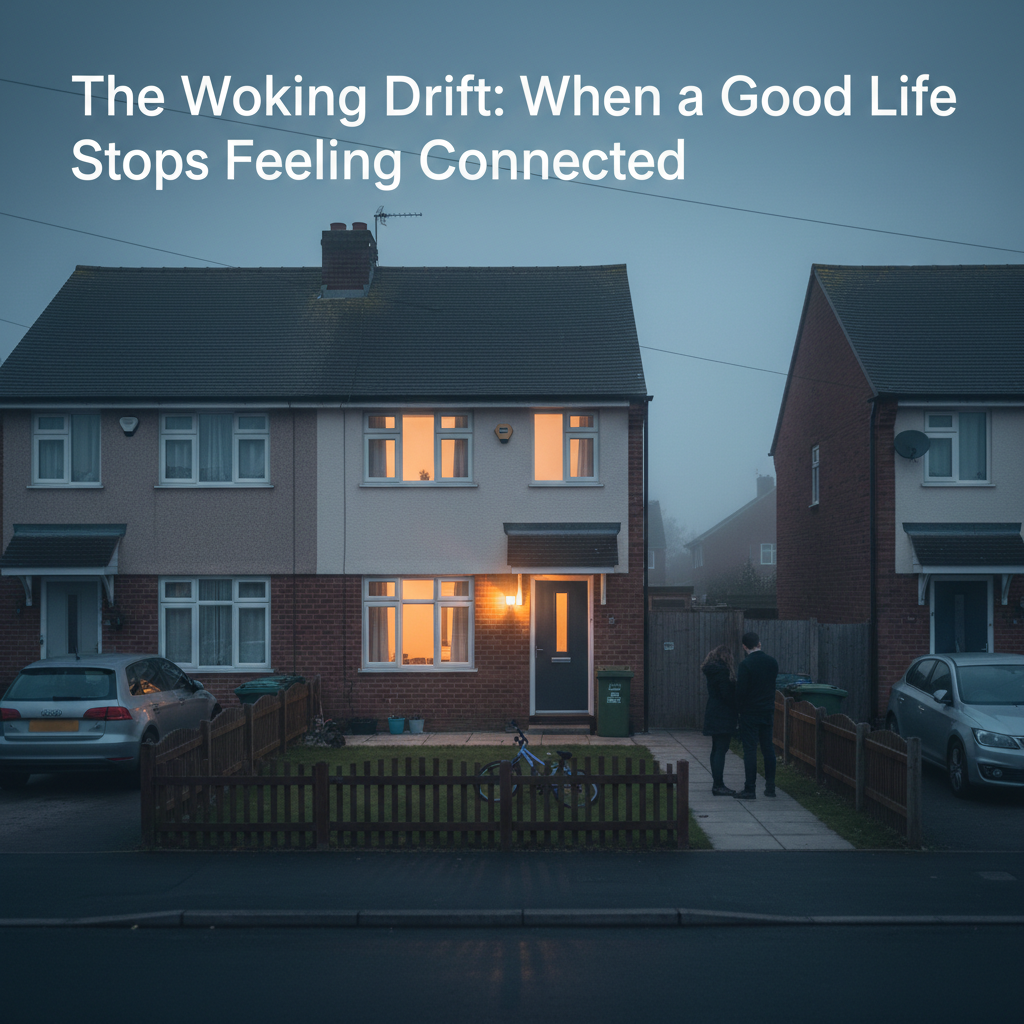
The Silent Drift: When You Live Together But Feel Miles Apart

When You Share a Home but Feel Increasingly Disconnected
You still live together. You still share meals, discuss plans, and manage everyday responsibilities. From the outside, everything may look perfectly normal.
Yet something feels different.
You find yourselves sitting in the same room but rarely having meaningful conversations. Evenings become dominated by television, phones, work, or family commitments. Days pass without really checking in with each other.
There may not have been a major argument or crisis. Instead, the connection has slowly faded over time.
This gradual process is something we often see in Relationship Counselling Surrey. Couples frequently describe feeling more like housemates, colleagues, or co-parents than romantic partners.
Relationship Drift Rarely Happens Overnight
Most couples do not wake up one day feeling disconnected.
Relationship drift tends to happen gradually through a series of small changes that often go unnoticed.
Work becomes busier.
Children need more attention.
Financial pressures increase.
Family responsibilities expand.
By the time life settles down, many couples realise they have spent months, or sometimes years, prioritising everything except their relationship.
What once felt effortless now requires conscious effort.
The Warning Signs Are Often Subtle
Many couples tell us they noticed some of the following:
- Conversations focus mainly on practical matters.
- Physical affection becomes less frequent.
- Date nights and shared activities gradually disappear.
- One or both partners feel lonely despite spending time together.
- Arguments seem repetitive and unresolved.
- Important thoughts and feelings are shared with friends before a partner.
- There is a growing sense of emotional distance.
None of these signs automatically mean a relationship is failing.
They often indicate that the relationship needs attention, understanding, and time.
Why Emotional Distance Can Feel So Painful
Humans are wired for connection.
When that connection feels weakened with the person closest to us, it can create feelings of sadness, frustration, confusion, and sometimes even self-doubt.
One partner may start wondering whether they are still loved.
The other may feel criticised or pressured without fully understanding why.
Over time, small misunderstandings can become entrenched patterns.
We often see situations where one partner reaches out for reassurance while the other withdraws because they feel overwhelmed. Unfortunately, this creates a cycle where both people feel increasingly misunderstood.
This pattern is often linked to issues discussed in our article about lack of intimacy, where emotional and physical closeness begin to fade together.
How Couples Counselling Helps Rebuild Connection
Many people assume that couples therapy is only for relationships in crisis.
In reality, some of the most productive work happens when couples seek support before problems become overwhelming.
Counselling provides dedicated time to focus on the relationship itself rather than everything happening around it.
In sessions, we commonly help couples:
- Improve communication. Learning how to talk openly without conversations becoming defensive or shutting down.
- Understand emotional needs. Helping each partner recognise what they need in order to feel valued, supported, and connected.
- Identify unhelpful patterns. Understanding how repeated cycles develop and what keeps them going.
- Feel heard and understood. Creating space for both partners to express themselves safely.
- Rebuild emotional connection. Developing practical ways to strengthen the relationship again.
The goal is not to decide who is right or wrong.
The goal is to help both of you understand each other more clearly and work together as a team.
Small Changes Can Make a Big Difference
While counselling can provide valuable support, there are also small steps that many couples find helpful.
Create Space for Real Conversations
Try setting aside ten or fifteen minutes each day without phones, television, or distractions.
Rather than discussing practical tasks, focus on each other.
Ask about feelings, experiences, worries, or things that brought enjoyment during the day.
Bring Back Small Acts of Connection
Relationships are often strengthened through everyday moments rather than grand gestures.
A thoughtful text message, making a cup of tea, offering a hug, or showing genuine interest in your partner's day can all help rebuild connection.
Prioritise Time Together
Busy schedules often mean relationships receive whatever time is left over.
Instead, try treating time together as something important enough to schedule.
A walk, a coffee, or an evening out can help create opportunities for connection that are otherwise easily lost.
You Do Not Have to Accept Emotional Distance as Normal
Feeling disconnected does not necessarily mean the relationship is beyond repair.
In fact, many couples who seek support discover that beneath the distance there is still care, affection, and a desire to reconnect.
The challenge is often finding a way back to each other.
If you are struggling with this in your relationship, we offer face-to-face and online sessions.
Sessions are booked on a session-by-session basis, with no obligation to continue.
Our fee is £80 per couple for a full hour session.
You can view our therapists, check availability, and book a session directly through our website.
Written by Sian Jones, Founder of Relationship Counselling Surrey. Sian has extensive experience helping couples improve communication, rebuild emotional connection, and strengthen their relationships.