The Digital Wall: When Screens Come Between You
Is Your Phone the Third Person in Your Relationship?
It’s a quiet moment. You’re unloading the dishwasher, and you mention something funny that happened on the commute from Woking. Your partner makes an affirming noise, a sort of “uh-huh,” but their eyes don’t leave the screen in their hand. You finish your story to silence, and when you look over, you see they’re still scrolling. They heard the words, but they weren’t really there with you.
It’s not a big fight. It’s not a dramatic event. But it’s a tiny prickle of disconnection, a feeling of being secondary to a glowing rectangle. And these moments, I’ve found, are happening more and more in relationships across Surrey.
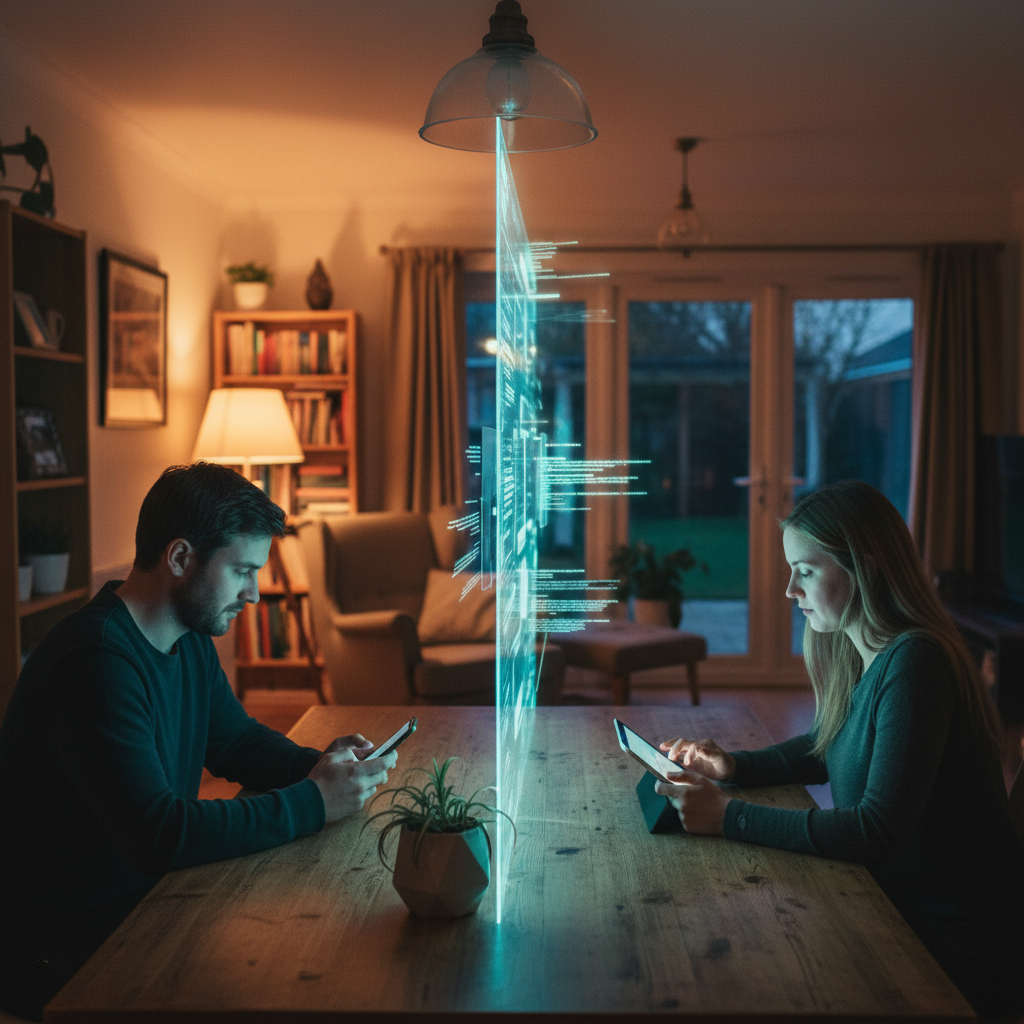
This isn’t about blaming anyone. Our phones are designed to hold our attention. They are our connection to work, friends, and the wider world. But that constant connection to everything else can slowly erode the primary connection we have with the person right next to us. It creates a kind of digital wall, built one notification at a time.
The Quiet Drift into Disconnection
What I've noticed in my work with couples is that this problem rarely arrives with a bang. It’s a slow, quiet drift. It starts with checking emails after dinner, then progresses to scrolling through social media while talking. Before you know it, you’re sitting in the same room, living in separate digital worlds.
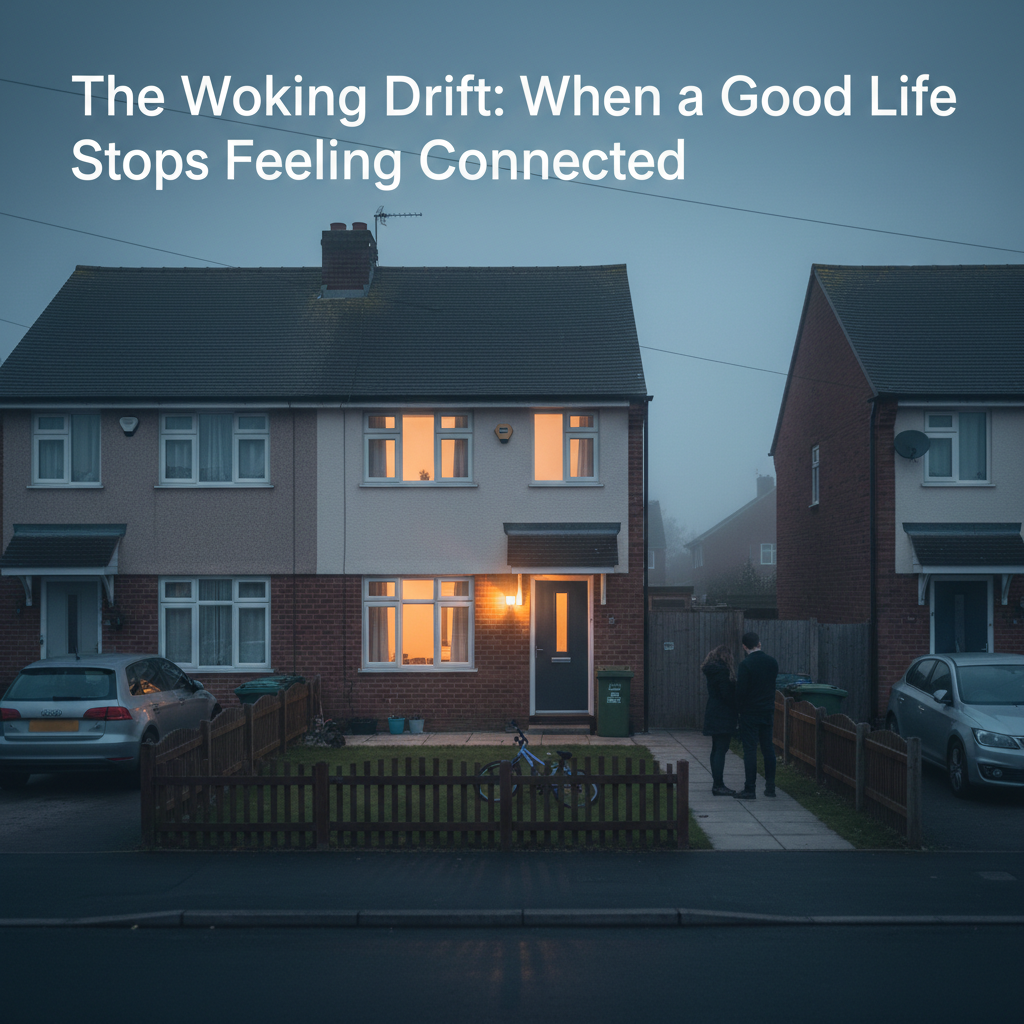
This pattern can be particularly difficult because on the surface, nothing is ‘wrong’. You’re still a team, you still manage the household, you still have a life together. But the emotional substance, the shared laughter over nothing, the easy intimacy – that starts to thin out. It’s a phenomenon we sometimes see with couples experiencing what we call The Guildford Disconnect, where a life that looks perfect from the outside feels empty on the inside.
The constant exposure to other people’s highlight reels on social media doesn’t help. Seeing curated images of other couples’ holidays and date nights can make your own quiet evening of parallel scrolling feel even more lacking. The comparison trap is subtle but powerful.
More Than Just “Being on Your Phone”
The issue isn't just about the time spent on screens; it's about the quality of attention being lost. Real connection is built in the small, in-between moments. It’s the shared glance across a room, the brief touch on the arm, the ability to listen not just to the words but to the feeling behind them.
When one or both of you are mentally toggling between your partner and your phone, you miss these cues. You’re physically present but emotionally absent. This can leave the other person feeling unseen and unimportant, which, over time, can lead to resentment and a deeper sense of loneliness within the relationship.
You might find yourselves having conversations by text even when you’re in the same house. Or perhaps you’ve simply stopped trying to share the small details of your day, because the effort of breaking through the digital distraction feels too great.
Practical Steps to Reconnect in the Digital Age
A full-scale “digital detox” can feel overwhelming, but making small, intentional changes can have a significant impact. It’s about reclaiming your relationship from the grip of technology, not banishing tech entirely.
- Start a gentle conversation. Choose a calm moment and speak from your own perspective. Instead of “You’re always on your phone,” try something like, “I’ve been feeling a bit disconnected from you lately, and I think our phones might be part of it. I really miss you.”
- Create phone-free zones or times. This is a classic for a reason. Agree on simple boundaries. Maybe the first 20 minutes when you both get home is a screen-free catch-up time. Or perhaps you decide to leave phones out of the bedroom altogether. It’s about creating pockets of protected time for just the two of you.
- Be proactively present. When your partner is talking, put your phone down, face down, and make eye contact. It’s a simple, powerful signal that says, “You are my priority right now.”
- Schedule ‘analogue’ time. Put a walk in the calendar. Go for a coffee in Epsom. Do something together that doesn’t and can’t involve a screen. It rebuilds the muscle of simply being together.
How Counselling Can Help You Find Your Way Back
Sometimes, these conversations are just too difficult to have on your own. The pattern is so ingrained that trying to change it leads to arguments and defensiveness. This is a point where relationship counselling in Surrey can provide the support you need.
In a session, we create a calm, neutral space where you can both talk about how the digital wall is affecting you, without fear of blame. It’s not about making rules or forcing one person to change. Instead, it’s about understanding the dynamic and working together to find a balance that feels right for both of you. You can learn more about what marriage counselling really looks like in Surrey today if you're curious about the process.
We can help you unpick the reasons behind the screen time and build strategies for strengthening your emotional connection. Our fee is £80 per couple for a full hour session, and we work on a session-by-session basis, so you’re always in control. We offer appointments both face-to-face across Surrey and online via Zoom.
If you feel that screens are stealing the intimacy from your relationship and you’d like to find your way back to each other, we’re here to help. You can learn about how to find the best couples counsellor for you in Surrey or contact us directly to book an initial session.
Written by Sian Jones, Founder of Relationship Counselling Surrey. Sian has extensive experience helping couples improve communication, rebuild emotional connection and strengthen their relationships.